Wenge
 Cabinet shop owners are now showing samples of this superb species to more customers and getting excellent feedback. In smaller projects, you'll find that wenge is excellent for contrast against medium tone woods such as oak, cherry, koa, and more. When you find good quality wenge veneer, it is because a veneer mill properly "cooked" the log prior to slicing it. This species is among the most difficult logs to slice. The wenge tree grows to 90 feet high and have a diameter of more than 36 inches. Wenge is in relatively short supply but the price has remained affordable.
Common Name: | Wenge, Mibotu, Bokonge, Palissandre du Congo | |
Scientific Name: | Millettia laurentii | |
Family: | Leguminosae | |
Color: | Dark brown with very dark (almost black) veining | |
Origin: | Zaire, Gabon, Cameroon, Tanzania | |
Hardness: | Hard | |
Texture: | Coarse, open pore | |
Finishing: | Readily accepts non-water-based stains and can be top-coated with oil based polyurethane, lacquer, and tung oil. Oil based finishes take longer to dry. Water based finishes are often problematic due to the oily/resinous nature of the wood. |


 Walnut burl is a classic beauty. It is used on everything from fine furniture to automobiles. The rich brown color is frequently accented with a light coat of penetrating stain which brings out the figure. Walnut is one of only a handful of species that lightens with exposure to UV light. Vintage walnut furniture pieces are usually very warm in color. The lightening process can take months, years, and even decades to achieve.
 Walnut burl is a classic beauty. It is used on everything from fine furniture to automobiles. The rich brown color is frequently accented with a light coat of penetrating stain which brings out the figure. Walnut is one of only a handful of species that lightens with exposure to UV light. Vintage walnut furniture pieces are usually very warm in color. The lightening process can take months, years, and even decades to achieve.
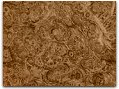 Walnut burl is a classic beauty. It is used on everything from fine furniture to automobiles. The rich brown color is frequently accented with a light coat of penetrating stain which brings out the figure. Walnut is one of only a handful of species that lightens with exposure to UV light. Vintage walnut furniture pieces are usually very warm in color. The lightening process can take months, years, and even decades to achieve.
 European walnut is blanket name that covers a wide variety of walnut lumber and veneer from Europe. The most common woods found under this category are French, Italian, Circassian, and Russian walnut. The finest European walnut burl veneer comes from trees which are hand-dug from the ground (the burl growth is commonly found at or below the ground level).
 Tamo ash is one of the most highly figured veneers available. It has a rolling figure similar to "quilt" but the shimmer is much stronger. This figure is often called "peanut" which is does not effectively describe the beauty of this veneer. Even in pictures, the iridescence does not fully show. Customers have described it as "3D" and compared it to water cascading over glass. Lesser figured tamo ash is used today as construction lumber in Japan!
 Sapele is a member of the mahogany family and like mahogany, this deciduous species grows quite large...up to 150 feet tall. Quartersawn sapele veneer is very even in color and grain. The highly sought-after pommele ("pom-el-LAY") sapele is stunning. Pommele sapele resembles rain drops cascading down a pane of glass. True quilted sapele is also in high demand because of its intense 3-D grain orientation.
 Redwood is a close cousin of the famous sequoia tree of California. Certainly the most prized growth/grain in redwood is burl which generally grows underground and must be excavated with specialized machinery. Typically used on automotive dashboards and small case goods, redwood burl has a pleasant color and shimmer when top coated with lacquer or oil-based polyurethane. It is such a beautiful wood, that it is hard to believe it's not an imported burl species!
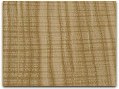 This striking display of color is remarkable among our veneer inventory. Our resources tell us that Olive Ash is not a true botanical species, but instead is simply an occurrence (within the European Ash family) where the heart of the tree grows abnormally causing alternating colors in the annual growth rings. This "beauty of the forest" is excellent for door panels, carcass work, and small furniture pieces.
 Mappa burl has wonderful color combination that often varies from light tan to a beautiful gold with dark red/brown burl pockets. Mappa veneer also has a very unique aroma which is striking similar to the smell of leather. Originally from Western Europe, mappa is the only species of poplar that develops this rare type of burl formation. Mappa burl veneers typically require a grain filler to level-out the voids in the burl pockets.
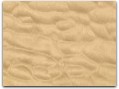 Quilt figure is the most sought-after grain types found in maple and is typically used on high-end projects such as guitars, automotive dashboards, and the finest of fine furniture. Trees containing usable quilted figue are exceedingly rare partly because this is one grain type which can be seen simply by looking at the bark. Undulatng and uninteriupted waves/lumps on the bark typically indicate a quilted tree or log.
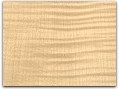 Curly maple is known by many names including "flame", "tiger", and "fiddleback" maple. The figure, which occurs in less than 1 in 25 logs, contains cross-grain shimmering ripples where cell orientation is balanced but uneven. The real beauty of a great curly maple veneer can be seen without any special finish. A penetrating oil finish is usually enough to bring out the chatoyance though some prefer to use a dye stain to further enhance the grain.
 Often considered the holy grail of fine woods, maple burls are wart-like growths typically growing on the lower part of the tree. Burls are believed to be caused by disease or damage to the tree during its early years. Every tree contains "dormant buds" which have all of the genetic information that a tree needs to grow a new tree. When the tree is damaged, these dormant buds are called to action and create a chaotic grain pattern that effectively patches the damage. A burl is often just nature's way of making a band-aid.
 Often considered the holy grail of fine woods, maple burls are wart-like growths typically growing on the lower part of the tree. Burls are believed to be caused by disease or damage to the tree during its early years. Every tree contains "dormant buds" which have all of the genetic information that a tree needs to grow a new tree. When the tree is damaged, these dormant buds are called to action and create a chaotic grain pattern that effectively patches the damage. A burl is often just nature's way of making a band-aid.
 Bird's eye figure occurs most commonly in hard maple. The stunning look of small, repetitive, and undulating "eyes" across the grain make this one of the most consumer-demanded maples. Though many theories exist, science has not yet proven what causes this figure. Unlike other maple grains, bird's eye figure can be very difficult to spot in a log unless the bark and cambium layer are removed.
 Ambrosia maple has a unique and stunning pattern in the grain which is caused by the Ambrosia beetle which bores small homes into the tree and introduces two different fungi. The first fungus (called Ambrosia fungus) lines the walls of the tunnel bored by the bug and becomes its food. The second fungus is what creates the amazing colors in the grain.
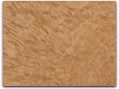 Madrone is mostly offered in straight grain and burl figure types. The burl grows on the root of the tree and is harvested by removing the tree and roots from the ground. Parts of the burl growth are typically visible from above ground at the base of the tree. The burls figure is usually tight and even and the color is generally consistent across the sheet. Madrone burl veneer has a soft and tactile texture. The highest grade madrone burl veneers are used in everything from keepsake boxes to fine automobiles.
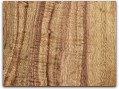 Koa is one of the forest's most prized gems. Koa is a fast growing tree native to Hawaii and is protected by the government and the Convention on International Trade in Endangered Species (CITES). Currently, the only logs that are commercially harvested for lumber and veneer are those which have fallen through acts of God. The tree ordinarily grows to 50 feet tall but larger specimens have been found. The veneer is often known for the curly figure which is present in much of the koa that is harvested today.
 The burl form of eucalyptus is not the traditional protuberence you would expect to see growing from a tree. Instead, the "burl" is formed inside the trunk. The eucalyptus tree (an evergreen) was introduced into California in 1856 and into Hawaii in about 1865 however commercial propogation of this species is generally limited to species from Australia and New Zealand. Despite this, the highest curly figured eucalyptus veneers are currently being grown in and exported from Spain.
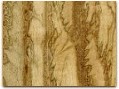 This may be the rarest veneer in the world. The log buyer at the factory said he had never seen a tree like this during his many years in the veneer industry. In fact, he didn’t want to give it up but he graciously agreed to let us bring back a few bundles. It is believed that this veneer came from the Limbe coast in Cameroon, Africa. The reps at the mill are unsure whether this highly-figured veneer is a unique species of etimoe or simply a very rare occurrence of growth caused by fungi or odd soil conditions.
 Carpathian elm burl is widely known for its beauty. The burl patterns are often very small and packed close together. The variety of color in elm burl veneer is largely associated with the living state of the tree when harvested. Dead elm trees have a tendency to produce a veneer which is darker and with less contrast than burls harvested from a living tree. Elm burl veneer on classic and high-end automobiles is quite common.
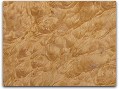 Contrary to popular opinion, chestnut burl veneer is very rare and is becoming more so each day. The chestnut tree is simply not a species that is known for producing large, clean burls. However, this is one burl type that has a very pleasant array of colors that is soft to the eye and compliments many other species very well. Several of our customers have combined this veneer with darker veneers such as walnut and wenge. The finished projects are simply gorgeous!
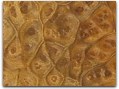 If you're looking for a veneer with unusual color and character, nothing beats camphor burl. The aroma from camphor is hard to mistake. In Japan, camphor wood is used for boat building because of its anti-fungal properties. In northeast Australia, the camphor tree is considered an invasive and efforts are being made to eradicate this species. However, the burl growth found in camphor is generally limited the areas around the Pacific Basin (at 1,500 feet above sea level).
 Quilted bubinga is a beautiful and lustrous veneer. It is often used on fine cabinetry and furniture and is known for its eye-catching color and shimmer. The red and pinkish hues in this species are quickly affected by exposure to UV light. With exposure, the pink colors often become more reddish and occasional a dark purple color. This change in color should not be considered a drawback. In fact, the aged color is beautiful.
 The bubinga tree can reach a height of up to 150 feet and can have a trunk diameter of over 6 feet. Bubinga is most often cut into veneer when the log shows the potential for quilted figure. The burl form of bubinga is incredibly rare. Several mills have insisted that it did not exist. We were lucky and found a small stash of it not long ago. It is stunningly gorgeous and extremely expensive. The log buyer at the mill indicated that this burl was the first he had found in 20+ years of buying bubinga logs. Amazing!
 Large, clean, and well-figured ash burl veneer is notoriously difficult to find. More commonly, you'll find ash burl with small dark brown knots which add a touch of "character" to the uniform creamy color. Ash burls are most often found at the trunk of the tree (as opposed to under-ground) which further indicates that the burl growth is the result of external influences such as insects, forest animals, and humans. With a vacuum press, ash burl is very easy to adhere to a substrate.
 Angire is an often overlooked beauty. Its texture is pleasing to the eye and works well projects where a subtle yet defined wood veneer is needed. Curly anigre is one of the more affordable figured veneer types despite it's relative rarity. Anigre can be found in Ghana, Cameroon, Congo, and in the rain forests of Uganda. I've had the pleasure of seeing numerous veneered projects in which the creator used anigre as a contrasting compliment to darker woods such as walnut and jarrah.
 Though straight grain amboyna is a beautiful wood, it is the amboyna burl that is the most sought after. Known for its interleaving colors of red, orange, brown and yellow, amboyna burl is unmistakably one of the forest's most valued species. Before a finish is applied, this veneer typically develops a white crystal-like formation on the surface which is a result of the minerals in the wood cells being displaced by air. To remove the crystals, simply spray the veneer with denatured alcohol and wipe clean. Amboyna burl is often used on automotive dashboards and was the first burl veneer to be offered in Rolls Royce automobiles.

 Quarter Slicing


 Half-Round Slicing

